
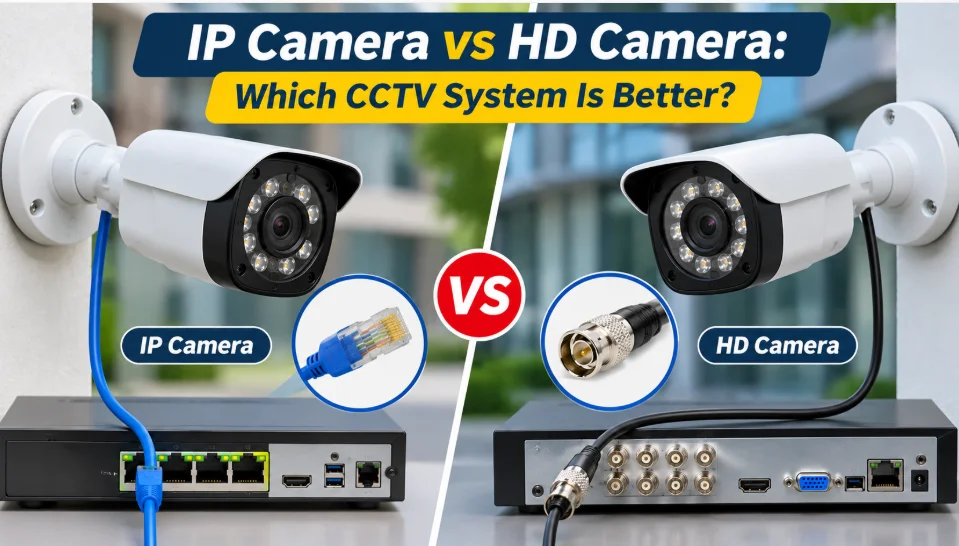
IP Camera vs HD Camera: Which CCTV System Is Better?
Imagine buying two CCTV cameras that both advertise 4MP resolution. One connects through an Ethernet cable to an NVR, while the other uses a coaxial cable and a DVR. Both record video, both offer remote viewing, and both may look similar in the product listing. So, why would you pay more for an IP camera?
The answer is not just megapixels. The real difference between an IP Camera vs HD Camera comes down to how video is transmitted, installation requirements, smart features, recording equipment, upgrade flexibility, and overall system cost.
If you are planning a new CCTV installation or upgrading an existing surveillance system, this guide will help you understand both technologies and choose the right option for your property.
What Is an IP Camera?
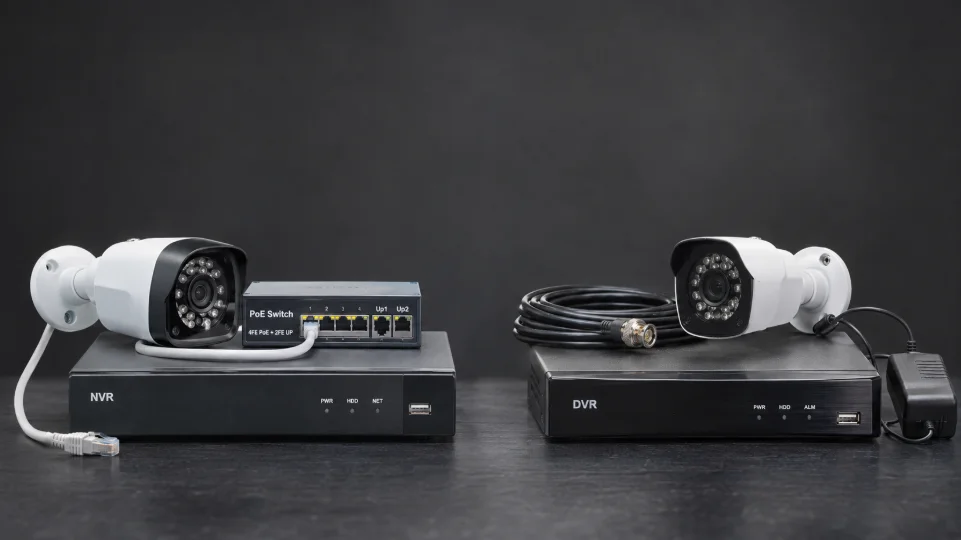
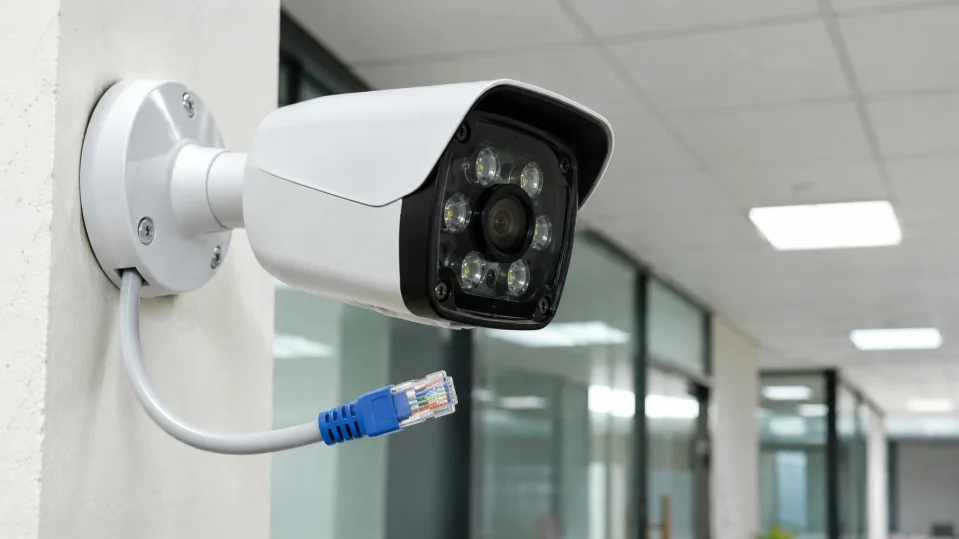
An IP camera, also known as an Internet Protocol camera or network camera, captures video and transmits it over a computer network. Instead of sending an analog video signal directly to a DVR, it converts the video into digital data and communicates with an NVR, network video software, or another compatible device.
Most modern IP cameras connect through Ethernet cables. Some models also support Wi-Fi, allowing them to communicate wirelessly with the network.
One major advantage of IP cameras is Power over Ethernet (PoE). With a compatible PoE camera and switch or NVR, a single Ethernet cable can carry both power and video data. This can simplify installation and reduce the number of cables required.
IP cameras are commonly used in homes, offices, retail stores, warehouses, factories, and large commercial surveillance systems.
What Is an HD CCTV Camera?
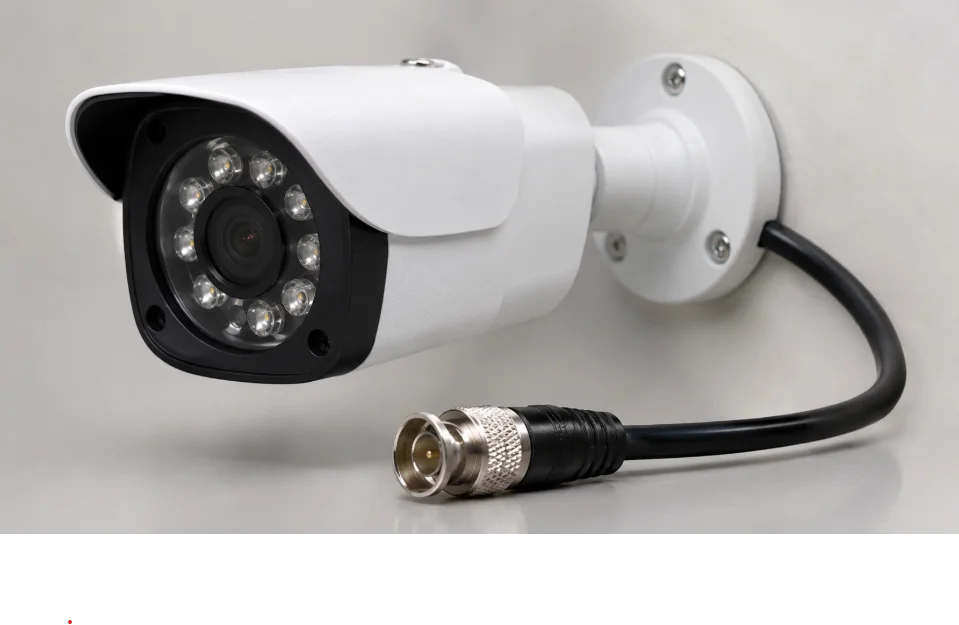
An HD CCTV camera is generally an analog security camera that sends video over coaxial cable to a compatible DVR. These cameras use technologies such as HD-TVI, HD-CVI, and AHD to transmit high-definition video over traditional CCTV cabling.
Unlike older analog cameras that offered low-resolution footage, modern HD analog cameras can support resolutions such as 2MP, 4MP, 5MP, and even 8MP or 4K, depending on the camera technology and model.
One of the biggest advantages of HD CCTV cameras is that they can often work with existing coaxial cable infrastructure. If you already have a DVR-based CCTV system, upgrading older cameras to compatible HD models may be easier and more affordable than replacing the entire setup.
HD analog cameras are commonly used in homes, small businesses, shops, and properties where an existing coaxial CCTV system is already installed.
IP Camera vs HD Camera: Quick Comparison
| Feature | IP Camera | HD CCTV Camera |
|---|---|---|
| Technology | Digital network camera | HD analog camera |
| Cable | Ethernet or Wi-Fi | Coaxial cable |
| Recorder | NVR | DVR |
| Video transmission | Network data | HD analog video signal |
| Power | PoE or separate power | Usually separate power |
| Resolution | Depends on camera model | Depends on camera technology and model |
| Smart features | Often offers advanced network-based features | Depends on camera and DVR |
| Installation | Requires network planning | Often simpler when coaxial wiring exists |
| Existing cable reuse | Depends on available network cabling | Often reuses existing coaxial cable |
| Scalability | Flexible for larger network systems | Depends on DVR channel capacity |
| Best for | New installations and scalable systems | Budget upgrades and existing coaxial systems |
Both technologies can deliver excellent surveillance footage. The right choice depends on your installation requirements, budget, camera specifications, and future expansion plans.
IP Camera vs HD Camera: Difference in Wiring
Wiring is one of the biggest differences between IP cameras and HD analog cameras.
An IP camera generally uses an Ethernet cable to connect to a network switch or PoE NVR. If the equipment supports PoE, the same cable can carry both power and video data. This reduces the need for separate power wiring at each camera location.
An HD analog camera usually connects to a DVR through coaxial cable. It also needs a power supply, either through a separate power cable or a suitable combined CCTV cable.
For a new installation, Ethernet cabling can offer more flexibility, especially when you plan to add network devices later. However, if your property already has coaxial wiring, an HD camera upgrade may save installation costs.
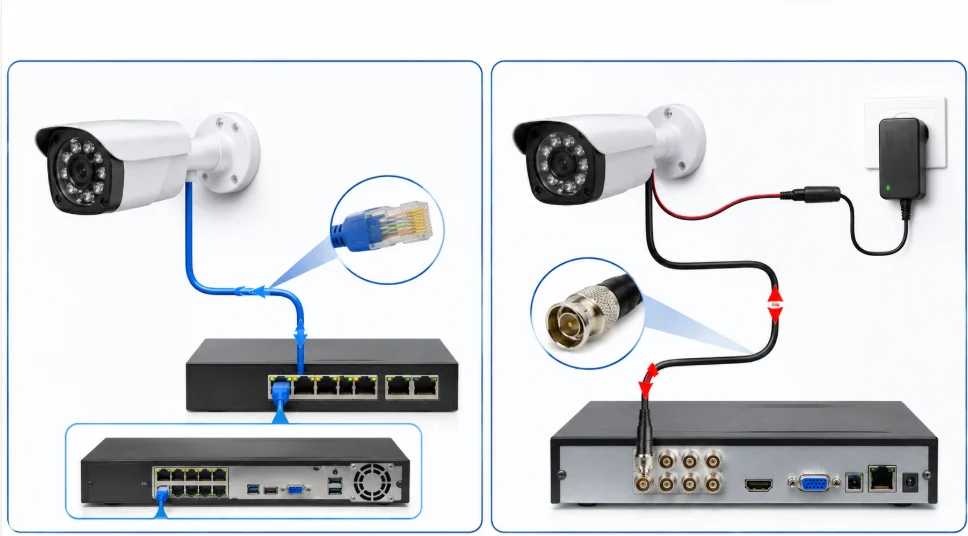
Image Quality: Which Camera Gives Better Video?
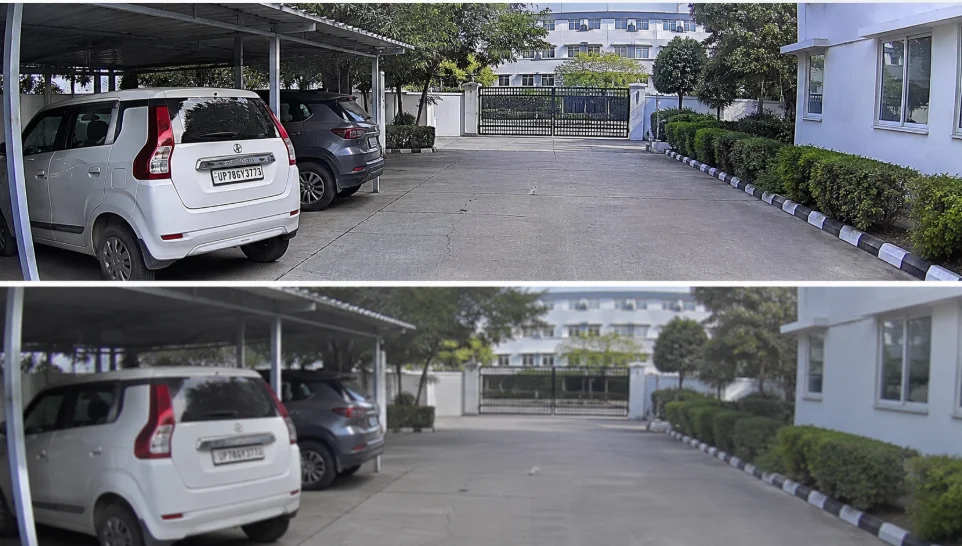
Many buyers assume that IP cameras always provide better image quality than HD analog cameras. That is not necessarily true.
Both technologies can deliver high-resolution video. An IP camera may support 4MP, 8MP, or higher resolutions, while modern HD analog cameras can also offer 4MP, 5MP, and 8MP options.
Actual image quality depends on several factors:
- Camera resolution and image sensor
- Lens quality and focal length
- Low-light performance
- Wide Dynamic Range (WDR)
- Frame rate
- Video compression
- Image processing capabilities
For example, a good-quality 4MP HD analog camera may produce clearer footage than a low-quality 4MP IP camera. Similarly, a well-designed IP camera with a better sensor and lens can outperform an entry-level HD camera.
Do not choose a camera based on megapixels alone. Check sample footage, night vision performance, lens specifications, and the camera’s real-world performance before purchasing.
IP Camera Advantages: Smart Features and Analytics
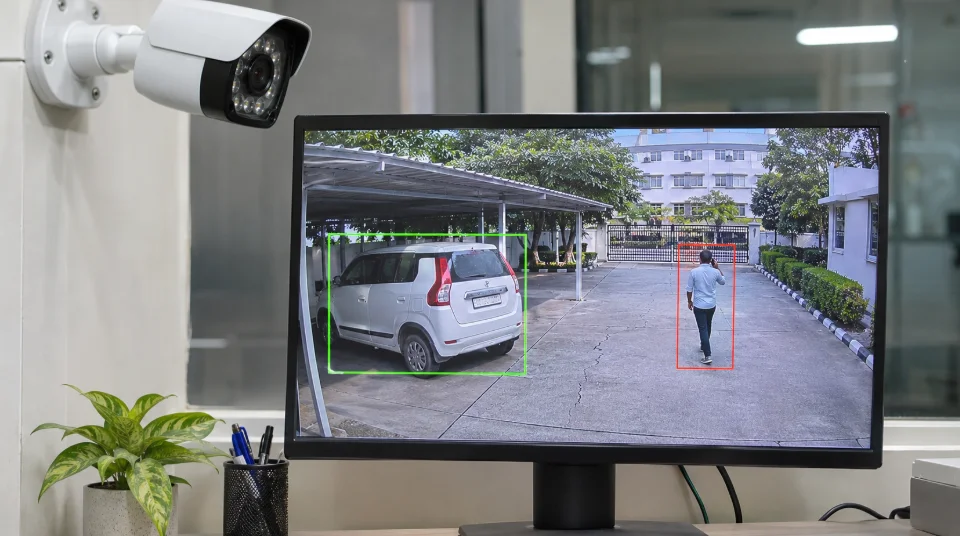
One of the strongest reasons to choose an IP camera is the range of smart features available in many models.
Depending on the manufacturer and model, IP cameras may support:
- Human and vehicle detection
- Motion detection
- Line-crossing detection
- Intrusion detection
- Face detection
- Smart event notifications
- Two-way audio
- Edge storage using a microSD card
- Integration with compatible video management software
These features can help reduce unnecessary notifications and make surveillance more useful.
However, not every IP camera includes all these features. Some advanced analytics require a compatible NVR, software license, or subscription.
HD analog cameras can also support smart features when paired with compatible DVRs. Modern DVRs may offer motion detection, human and vehicle classification, and other analytics. Therefore, compare the actual camera and recorder specifications rather than assuming that every IP camera is smarter than every HD camera.
[IMAGE 6 – PLACE AFTER THIS SECTION]
- Filename:
ip-camera-smart-features.webp - Alt text: IP CCTV camera smart analytics showing person and vehicle detection.
- Image prompt: Create a realistic professional CCTV surveillance monitoring scene showing an IP security camera view on a computer monitor. The screen should display a commercial parking area with a person and a vehicle, with subtle and technically believable detection bounding boxes around them. Include a modern IP camera in the scene if space allows. Realistic monitor reflections, natural office lighting, accurate surveillance interface appearance, 16:9 landscape. Avoid readable fake interface text, brand logos, watermarks, exaggerated neon graphics, or futuristic effects. It should resemble a genuine security control-room photograph, not AI-generated.
DVR vs NVR: Which Recorder Do You Need?
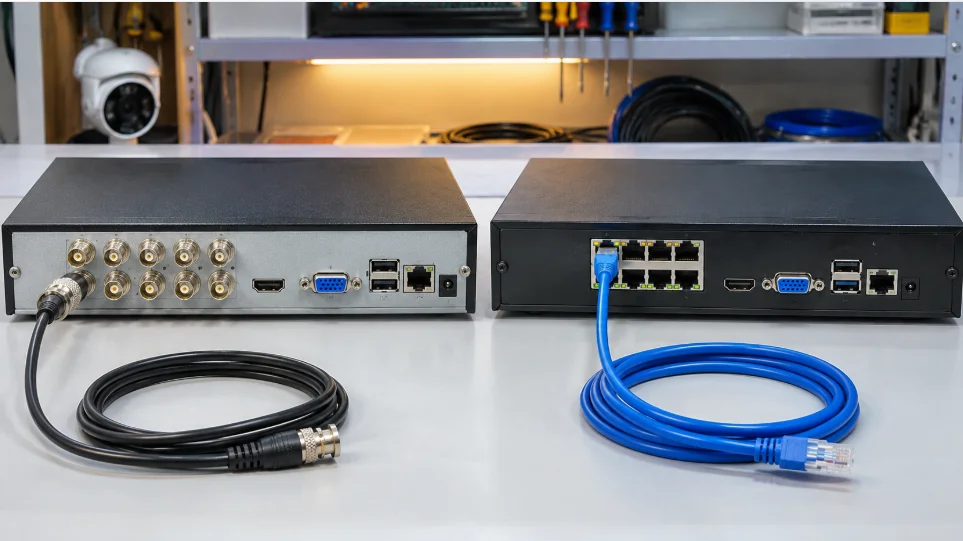
The recording device is another important difference between IP and HD CCTV systems.
An IP camera usually connects to an NVR (Network Video Recorder). The NVR receives digital video over the network and stores it on a hard drive. Depending on the system, IP cameras may connect directly to a PoE NVR or through a network switch.
An HD analog camera usually connects to a DVR (Digital Video Recorder). The DVR receives video signals through coaxial inputs, processes the footage, and records it.
Some modern hybrid DVRs also support selected IP camera channels. This means you may be able to add certain IP cameras to an existing DVR system. However, compatibility depends on the recorder model, supported protocols, firmware, resolution limits, and available channels.
Before buying a recorder, check the number of supported channels, maximum recording resolution, storage capacity, and camera compatibility.
You can also use our CCTV storage calculator to estimate how much storage your surveillance system may need.
[IMAGE 7 – PLACE AFTER THIS SECTION]
- Filename:
dvr-vs-nvr-cctv-recording.webp - Alt text: CCTV NVR and DVR recording equipment comparison.
- Image prompt: Create a realistic professional product comparison photograph showing a CCTV DVR and an NVR recorder placed side by side on a clean technical workbench. Show the DVR with coaxial BNC video input connections and the NVR with Ethernet network ports. Include subtle cable examples that make the difference understandable. Accurate ports and hardware proportions, natural studio lighting, realistic metal casing, 16:9 landscape. No logos, no readable fake labels, no watermark, no incorrect connectors. It must look like an authentic electronics product photograph, not AI-generated.
Installation Cost: IP Camera vs HD Analog Camera
Installation cost depends on the property, cable routes, camera count, recorder, and labor charges.
For a new installation, IP cameras may require Ethernet cabling, network switches, PoE equipment, and network configuration. Although the initial cost can be higher in some setups, a single PoE cable can simplify power and data connections.
HD analog cameras may be more economical when you already have coaxial cables and a compatible DVR. In that situation, you may only need to replace the cameras or upgrade the recorder.
However, if you are building a new surveillance system from scratch, the cost difference may be smaller than expected. Compare the total installation cost, not just the price of individual cameras.
Remote Viewing: IP Camera vs HD Camera
Both IP and HD analog CCTV systems can support remote viewing.
An IP camera can be accessed through a compatible mobile app, desktop client, web interface, or video management software. Remote access usually requires the camera or NVR to be connected to a network.
HD analog cameras can also be viewed remotely through a DVR. The DVR connects to the internet and provides access through the manufacturer’s mobile app or desktop software.
For secure remote access, use strong passwords, update firmware, and avoid exposing recorder services directly to the internet unless necessary. Where supported, use the manufacturer’s secure remote-access service or a properly configured VPN.
If you need help accessing your CCTV system remotely, see our guide on how to port forward a CCTV DVR.
Maintenance and Reliability
Both IP and HD analog systems can provide reliable surveillance when installed correctly and maintained regularly.
IP systems require proper network configuration. Problems such as IP address conflicts, weak network connections, incorrect switch settings, or faulty Ethernet cables can interrupt video transmission.
HD analog systems are generally simpler to troubleshoot because each camera sends its video signal directly to the DVR through coaxial cabling. However, damaged connectors, poor-quality cables, interference, and power supply problems can still affect the video.
For both systems, keep firmware updated, inspect cables and connectors, use reliable power supplies, and check recording playback regularly.
If an IP camera stops working, our IP camera troubleshooting guide may help you identify common network and connection issues.
System Expansion and Scalability
IP cameras are often a better choice for large or expanding surveillance systems.
You can connect cameras through network switches and organize them across different areas of a building. Depending on the network design and recorder capacity, this can make it easier to expand a system over time.
HD analog systems can also be expanded, but the number of cameras is limited by the available DVR channels. Adding more cameras may require replacing the recorder or installing an additional DVR.
For a small property with a fixed number of cameras, this may not matter. For a large office, warehouse, or multi-building installation, network-based surveillance can provide more flexibility.
IP Camera Benefits: Advantages and Disadvantages
Before making a decision, consider the main advantages and disadvantages of both technologies.
Advantages of IP Cameras
- Digital network-based video transmission
- PoE support on compatible models
- Flexible network installation
- Wide range of smart analytics
- Easy integration with compatible software
- Suitable for large and expandable systems
Disadvantages of IP Cameras
- Some models and accessories can be expensive
- Network configuration may require technical knowledge
- Network issues can affect video transmission
- Compatibility between cameras and recorders must be checked
Advantages of HD CCTV Cameras
- Can reuse existing coaxial cabling
- Often economical for upgrading older CCTV systems
- Simple connection to a compatible DVR
- Modern models support high-definition resolutions
- Suitable for small and medium-sized installations
Disadvantages of HD CCTV Cameras
- Usually require separate power wiring
- Expansion depends on DVR channel capacity
- Advanced features depend on camera and recorder support
- Less flexible than network-based systems in some large installations
When Should You Choose an IP Camera?
An IP camera is a good choice if you are installing a new CCTV system and want more flexibility for future upgrades.
Consider IP cameras if:
- You need high-resolution network cameras.
- You want PoE installation.
- You need advanced video analytics.
- You plan to install cameras across a large property.
- You want integration with network video management software.
- You may expand the surveillance system later.
You can also explore compatible ONVIF IP camera software and tools if you want to manage or discover supported network cameras using a computer.
When Should You Choose an HD CCTV Camera?
An HD analog camera may be the better option if you already have a coaxial CCTV installation and want to upgrade without replacing all the existing wiring.
Consider HD CCTV cameras if:
- You already have a compatible DVR.
- Your property has existing coaxial cables.
- You want to keep installation costs low.
- You need a straightforward surveillance setup.
- You do not require advanced network-based features.
For many small shops, homes, and offices, a modern HD CCTV system can still provide dependable surveillance.
Can You Connect an IP Camera to an HD DVR?
In some cases, yes. Certain modern hybrid DVRs support both HD analog cameras and selected IP cameras.
However, not every DVR supports IP cameras. You should check the recorder’s specifications for supported IP channels, ONVIF compatibility, maximum resolution, and network camera limits.
Even if a DVR supports IP cameras, some advanced camera features may not work through the recorder. Always verify compatibility before purchasing a new camera.
IP Camera vs HD Analog Camera: Final Verdict
There is no single winner for every CCTV installation.
IP cameras are generally a better choice for new installations, advanced analytics, PoE wiring, network integration, and systems that may need to expand in the future.
HD analog cameras remain a practical option for users who already have coaxial wiring and want to upgrade their surveillance system without replacing the entire infrastructure.
Before making your decision, compare camera specifications, recorder compatibility, installation costs, night vision performance, and the features you actually need.
The best CCTV system is not necessarily the most expensive one. It is the system that delivers reliable footage, fits your budget, and meets your security requirements.
Frequently Asked Questions
What is the main difference between an IP camera and an HD camera?
An IP camera transmits digital video over a network, usually through Ethernet or Wi-Fi. An HD analog camera sends an HD video signal through coaxial cable to a compatible DVR.
Is an IP camera better than an HD CCTV camera?
An IP camera may offer more flexibility, network integration, and advanced analytics. However, a good HD analog camera can also provide excellent video quality. The better choice depends on your requirements and budget.
Do IP cameras need an NVR?
Most IP camera systems use an NVR for centralized recording. However, some IP cameras can record to a microSD card, NAS, or compatible video management software without a traditional NVR.
Can HD CCTV cameras record in 4K?
Yes. Some modern HD analog camera technologies support 8MP or 4K resolution. You must use a compatible camera, DVR, and cabling setup.
Can I use my existing coaxial cable for HD CCTV cameras?
In many cases, yes. If the existing cable is in good condition and compatible with the camera technology, you may be able to reuse it when upgrading to HD analog cameras.
Do IP cameras support Power over Ethernet?
Many IP cameras support PoE. A compatible PoE switch or NVR can supply power and transmit video data through a single Ethernet cable.
Can I connect an IP camera to a DVR?
Some hybrid DVRs support selected IP cameras. Standard analog-only DVRs generally do not. Always check the recorder’s specifications before connecting an IP camera.
Which camera is cheaper: IP or HD analog?
HD analog cameras can be more economical when existing coaxial wiring and a compatible DVR are available. IP camera installation costs depend on the network equipment, cabling, and camera features.
Do IP cameras provide better night vision?
Not automatically. Night vision performance depends on the image sensor, lens, infrared LEDs, image processing, and lighting conditions. Compare the actual specifications and sample footage.
Can I mix IP and HD analog cameras in one CCTV system?
Yes, if you use a compatible hybrid DVR or a system designed to support both technologies. Check the recorder’s channel limits and camera compatibility before purchasing.
Final Thoughts
Choosing between an IP camera and an HD CCTV camera is about more than video resolution. You should consider wiring, recording equipment, installation cost, smart features, and future expansion.
If you are starting from scratch, an IP camera system is worth considering for its flexibility and network-based features. If you already have coaxial wiring, upgrading to modern HD analog cameras can be a cost-effective solution.
Take time to compare the complete system before buying. A properly selected and installed CCTV setup will serve you better than simply choosing the camera with the highest megapixel rating.
