
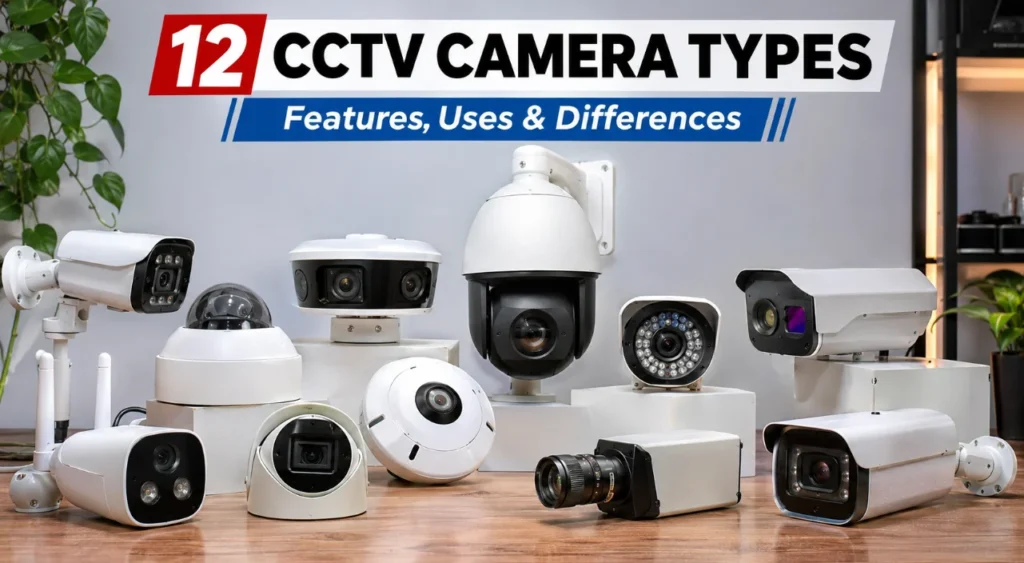
Choosing a CCTV camera isn’t as simple as picking a model with a high megapixel rating. A camera designed to monitor a store entrance may not provide the coverage needed for a large parking lot. Similarly, a compact indoor camera may not survive rain, dust, or extreme outdoor temperatures.
There are several different types of CCTV cameras, and each is designed for a particular surveillance requirement. Some are identified by their physical shape, such as dome, bullet, and turret cameras. Others are classified by how they transmit video, such as IP, analog, and wireless cameras. Specialized cameras use infrared or thermal imaging to monitor areas in challenging lighting conditions.
Understanding these differences will help you choose the right camera for your home, office, warehouse, retail store, or commercial property.
In this guide, we’ll explain 12 CCTV camera types, their features, advantages, limitations, and practical applications.
Quick Comparison of 12 CCTV Camera Types
Before exploring each camera individually, here’s a quick overview of the different types of security cameras and where they are commonly used.
| CCTV Camera Type | Main Features | Best Use |
|---|---|---|
| Dome Camera | Rounded protective housing | Shops, offices, indoor areas |
| Bullet Camera | Long cylindrical design | Outdoor walls, gates, parking |
| Turret Camera | Adjustable exposed lens | Homes, businesses, outdoor areas |
| PTZ Camera | Pan, tilt, optical zoom | Large properties, parking lots |
| Fisheye Camera | Ultra-wide viewing angle | Warehouses, large rooms |
| Box Camera | Separate interchangeable lens | Industrial surveillance |
| Multi-Sensor Camera | Multiple imaging sensors | Large open areas |
| IP Camera | Digital network transmission | Modern CCTV installations |
| Analog HD Camera | HD video over coaxial cable | Existing DVR systems |
| Wireless Camera | Wi-Fi video transmission | Homes, small offices |
| Infrared Camera | Night vision using IR illumination | Dark areas, nighttime monitoring |
| Thermal Camera | Detects heat radiation | Perimeters, industrial sites |
Important: These categories are not all mutually exclusive. For example, a bullet camera can also be an IP camera, wireless model, or infrared camera. Some describe physical design, while others describe connectivity or imaging technology.
1. Dome CCTV Camera
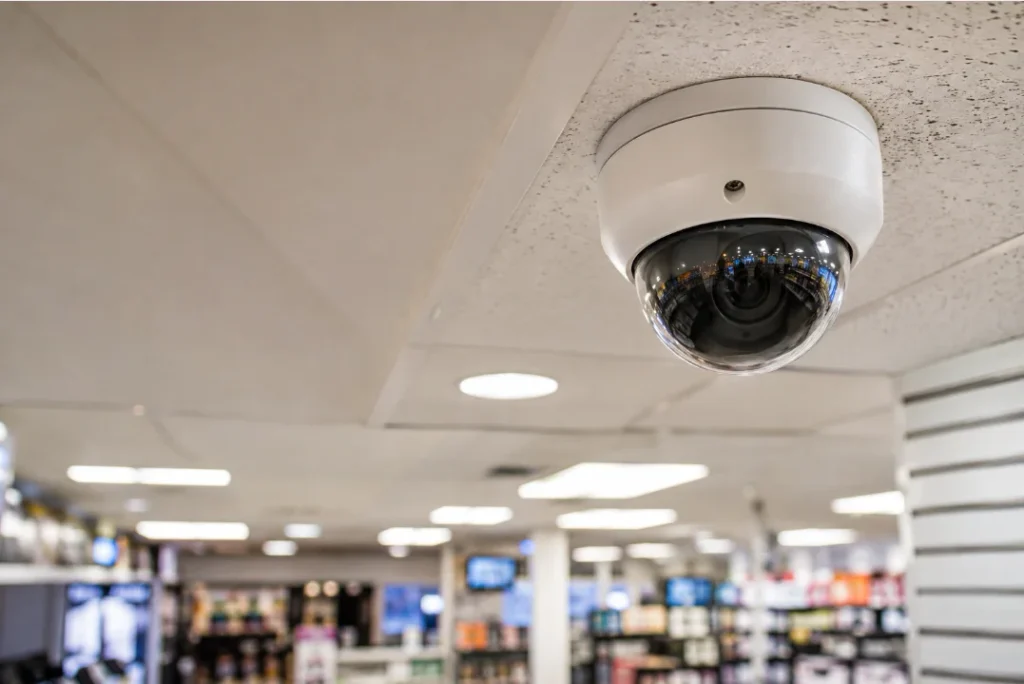
A dome camera is one of the most commonly installed types of CCTV cameras. It gets its name from the rounded protective housing that covers the camera lens.
These cameras are frequently installed on ceilings and walls in retail stores, offices, hotels, restaurants, and residential buildings.
One advantage of a dome design is that it makes the camera’s viewing direction less obvious from a distance. Some models also include vandal-resistant housings that help protect the camera against physical damage.
Main features
- Compact and relatively discreet design.
- Available in indoor and outdoor versions.
- Some models include infrared night vision.
- Vandal-resistant options are available.
- Suitable for ceiling and wall mounting.
Where are dome cameras used?
Dome cameras are commonly installed in:
- Retail stores and supermarkets.
- Office corridors and reception areas.
- Hotel lobbies.
- Residential hallways.
- Elevators and commercial buildings.
Advantages and disadvantages
Advantages
- Compact appearance.
- Suitable for many indoor environments.
- Vandal-resistant models are available.
- The lens direction is less obvious from a distance.
Disadvantages
- The protective cover can cause infrared reflections if the camera is poorly installed or the dome becomes dirty.
- Some models are harder to aim precisely than turret cameras.
- A standard indoor model may not withstand outdoor weather.
Best choice: Use a dome camera when you need discreet monitoring in shops, offices, corridors, or other indoor spaces.
2. Bullet CCTV Camera
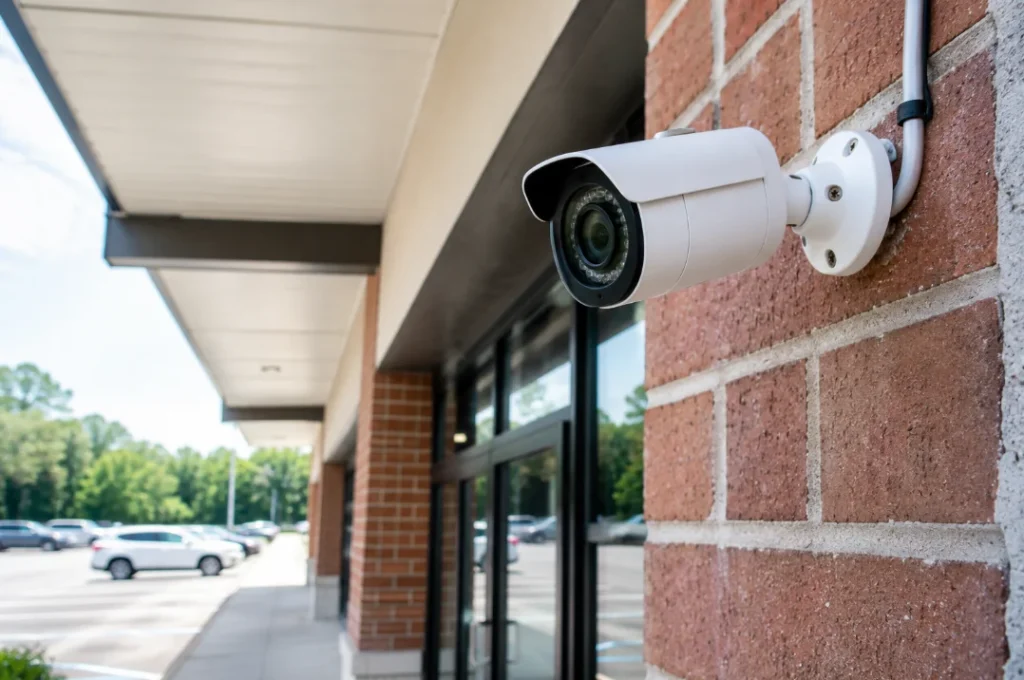
A bullet camera has a long, cylindrical body that makes it easy to recognize. It is commonly installed on exterior walls, poles, and building corners to monitor entrances, driveways, parking areas, and property boundaries.
Unlike a discreet dome camera, a bullet camera is clearly visible. This can make it a useful visual deterrent in locations where the presence of surveillance equipment should be obvious.
Many outdoor bullet cameras come with weather-resistant housings and integrated infrared LEDs.
Main features
- Cylindrical housing.
- Suitable for wall and pole mounting.
- Available with fixed and varifocal lenses.
- Many models include infrared illumination.
- Outdoor-rated models are available.
Where are bullet cameras used?
- Building entrances.
- Driveways and garages.
- Parking lots.
- Warehouse boundaries.
- Residential gates.
- Outdoor walkways.
Advantages and disadvantages
Advantages
- Easy to identify and position.
- Good choice for monitoring long, narrow areas.
- Many outdoor models are weather-resistant.
- Visible installation can discourage unwanted activity.
Disadvantages
- More noticeable than dome cameras.
- Can be physically redirected if mounted within reach.
- A fixed-lens model may not provide the desired viewing angle.
Best choice: Choose a bullet camera for outdoor surveillance, especially when monitoring gates, parking spaces, driveways, and building perimeters.
3. Turret CCTV Camera
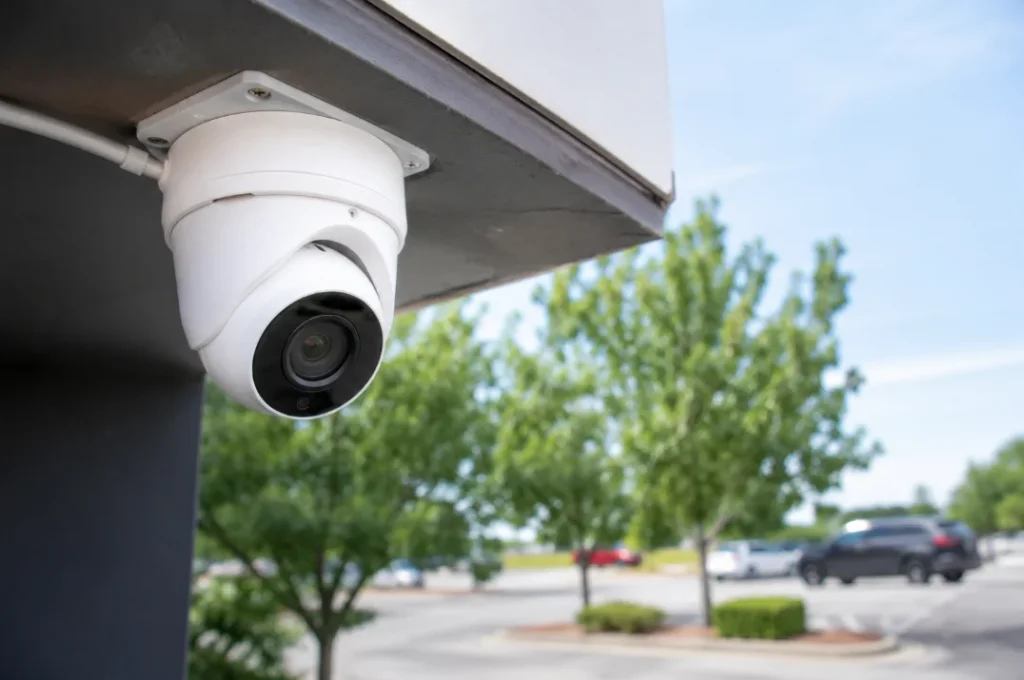
A turret camera, sometimes called an eyeball camera, has a rounded adjustable camera assembly attached to a mounting base.
Unlike a traditional dome camera, its lens is generally exposed rather than covered by a transparent dome. This design makes it easier to adjust the viewing angle during installation.
Turret cameras are popular because they offer a practical balance between the compact appearance of a dome camera and the straightforward aiming of a bullet camera.
Main features
- Adjustable ball-shaped camera assembly.
- Compact housing.
- Available in IP and analog HD versions.
- Infrared and color night vision options.
- Indoor and outdoor models.
Where are turret cameras used?
- Residential properties.
- Office entrances.
- Building exteriors.
- Retail stores.
- Garages and parking areas.
Advantages and disadvantages
Advantages
- Easy to adjust during installation.
- Compact design.
- Exposed lens avoids some of the infrared reflection problems associated with poorly positioned dome cameras.
- Suitable for indoor and outdoor installations when properly rated.
Disadvantages
- Lens direction is more visible.
- Exposed lens can collect dust and dirt.
- Some installations require careful adjustment to prevent glare from nearby lights.
Best choice: Turret cameras are a good all-round option for homes and businesses that need flexible camera positioning.
4. PTZ CCTV Camera
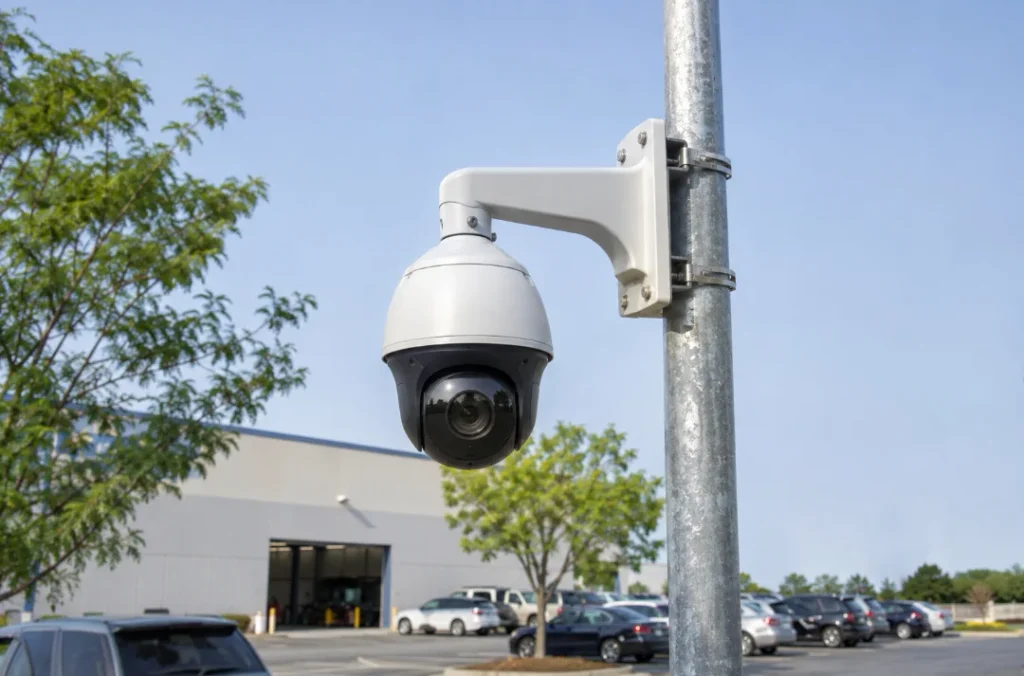
PTZ stands for Pan, Tilt, and Zoom. These cameras can move horizontally, move vertically, and zoom in or out to monitor different parts of a location.
Unlike fixed cameras, which continuously monitor one viewing direction, a PTZ camera can change its position remotely through compatible CCTV software, an NVR, or a control system.
Some models support preset positions, automatic patrols, and auto-tracking features. The availability of these functions depends on the specific camera.
Main features
- Horizontal pan movement.
- Vertical tilt movement.
- Optical zoom on supported models.
- Programmable viewing presets.
- Remote control through compatible software.
- Auto-tracking on selected models.
Where are PTZ cameras used?
- Large parking lots.
- Shopping centers.
- Airports.
- Industrial facilities.
- Stadiums.
- Large warehouses.
- City surveillance installations.
Advantages and disadvantages
Advantages
- Can monitor multiple viewing directions.
- Optical zoom helps inspect distant subjects.
- Useful for large open spaces.
- Remote operation provides additional flexibility.
Disadvantages
- Usually costs more than a basic fixed camera.
- Requires suitable power and network infrastructure.
- May need an operator or carefully configured automatic patrol.
- A single-lens PTZ camera cannot continuously watch every direction at once.
Best choice: PTZ cameras are suitable for large properties where operators need to change the viewing direction or inspect specific areas remotely.
5. Fisheye or 360-Degree CCTV Camera
A fisheye camera uses an ultra-wide-angle lens to capture a much larger field of view than a standard fixed camera.
Depending on the model and installation, it can monitor a large room or open area using a single camera. The captured image may appear curved or circular because of the wide-angle lens.
Compatible software can digitally dewarp the image into more familiar viewing layouts.
Main features
- Ultra-wide-angle lens.
- Panoramic viewing.
- Large area coverage.
- Digital dewarping on supported systems.
- Available in different resolutions.
Where are fisheye cameras used?
- Shopping malls.
- Warehouses.
- Hotel lobbies.
- Conference rooms.
- Large retail spaces.
- Open-plan offices.
Advantages and disadvantages
Advantages
- Wide field of view.
- Can reduce the number of cameras needed in some installations.
- Useful for monitoring large indoor spaces.
- Multiple viewing layouts may be available through compatible software.
Disadvantages
- Images near the edges can appear distorted.
- Digital dewarping depends on compatible software.
- A wide field of view does not automatically provide detailed identification at a distance.
Best choice: Choose a fisheye camera when you need a broad overview of a large room or open indoor area.
6. Box CCTV Camera
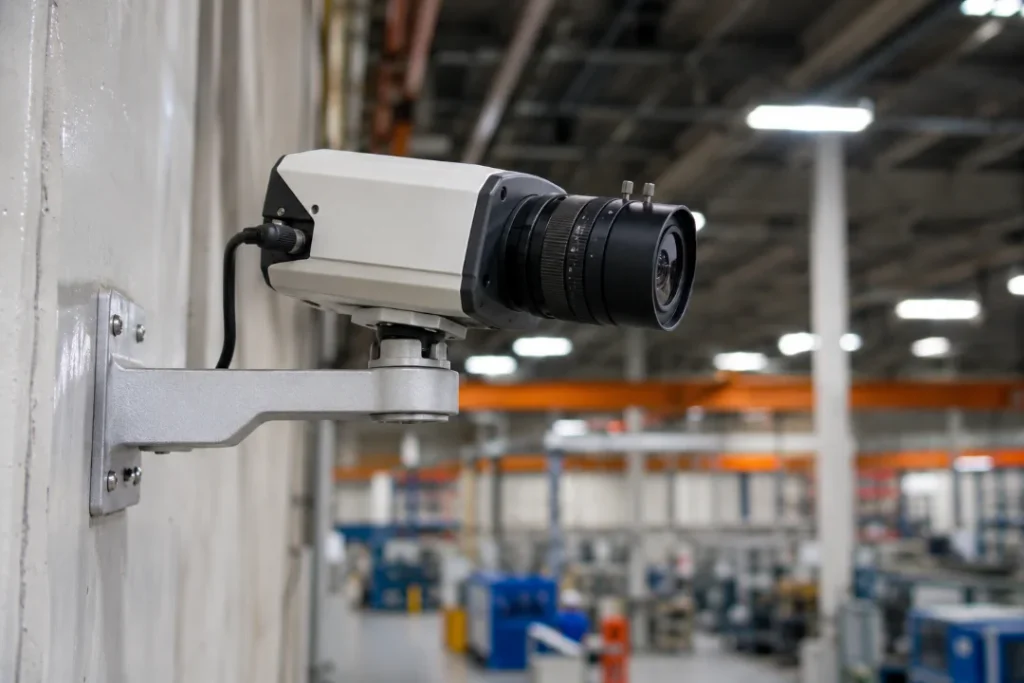
A box camera has a rectangular camera body and typically uses a separate lens. This makes it useful for installations where the lens needs to be selected according to the monitoring distance and viewing angle.
Although compact dome and bullet cameras are more common in everyday installations, box cameras still have specialized applications in industrial and commercial surveillance.
Some models can be installed inside protective outdoor housings.
Main features
- Rectangular body.
- Separate lens on interchangeable-lens models.
- Flexible lens selection.
- Specialized mounting options.
- Available for professional surveillance applications.
Where are box cameras used?
- Industrial facilities.
- Manufacturing plants.
- Specialized inspection locations.
- Long-distance monitoring installations.
- Controlled commercial environments.
Advantages and disadvantages
Advantages
- Lens selection can be customized.
- Flexible for specialized surveillance requirements.
- Can be installed with suitable protective housings.
Disadvantages
- Larger and less compact than many modern camera designs.
- Requires careful lens selection.
- Outdoor installations may need additional protective housing.
Best choice: Box cameras are useful when a standard fixed-lens camera does not meet a specialized viewing requirement.
7. Multi-Sensor CCTV Camera
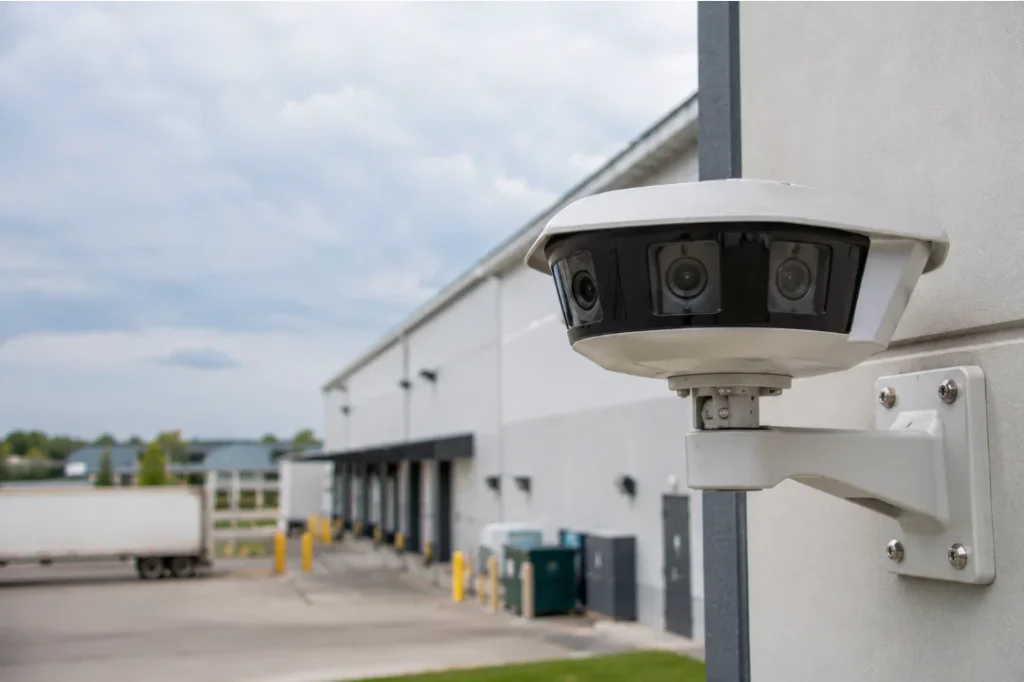
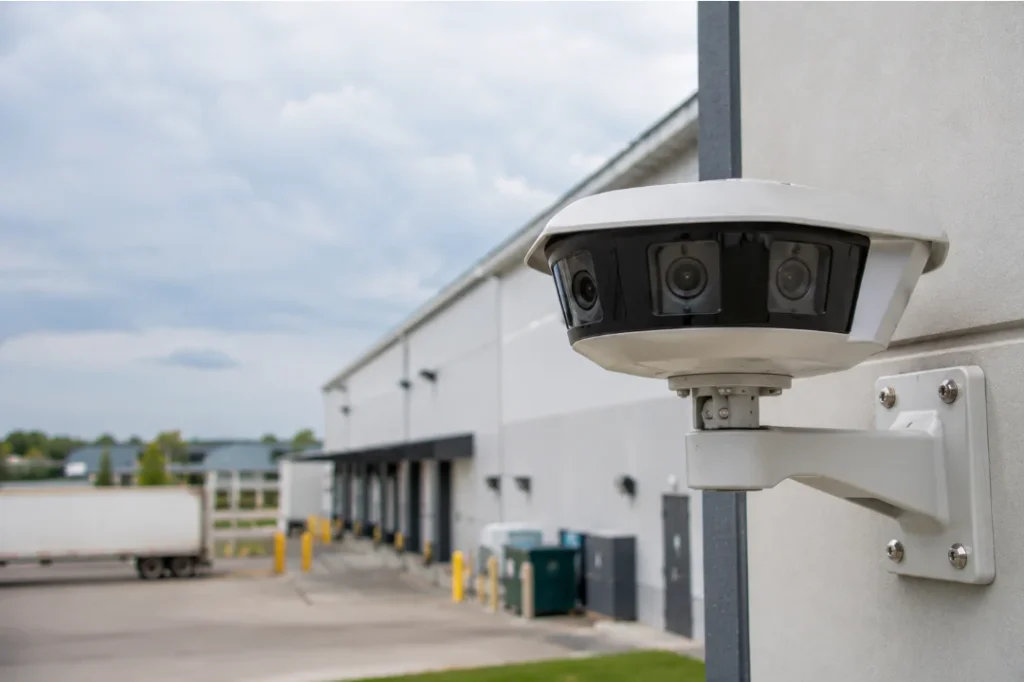
A multi-sensor camera contains multiple imaging sensors or camera modules in one housing. Each sensor captures a different viewing direction, allowing the system to cover a wider area than a conventional single-sensor camera.
Some models combine multiple video streams into a panoramic image, while others provide separate views.
These cameras are particularly useful when a large area needs to be monitored from one mounting location.
Main features
- Multiple imaging sensors.
- Wide-area coverage.
- Different viewing angles.
- Panoramic image stitching on supported models.
- Reduced need for multiple separate camera housings in some applications.
Where are multi-sensor cameras used?
- Large building corners.
- Commercial parking areas.
- Warehouses.
- Industrial facilities.
- Large outdoor properties.
- Public spaces.
Advantages and disadvantages
Advantages
- Covers multiple directions.
- Useful for reducing blind spots.
- Can provide several views from one installation point.
- Suitable for wide-area surveillance.
Disadvantages
- Higher initial cost than basic cameras.
- Requires suitable mounting and network infrastructure.
- Configuration and video management can be more complex.
- Each sensor’s resolution and viewing angle must be considered.
Best choice: Use a multi-sensor camera when one mounting position needs to monitor several directions simultaneously.
8. IP CCTV Camera
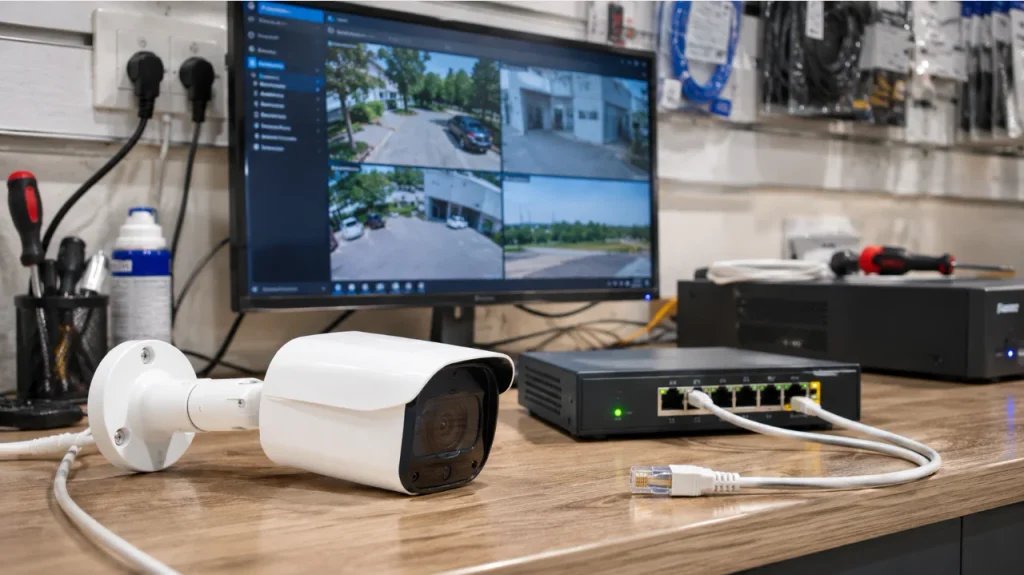
An IP camera, also called a network camera, captures video and transmits it as digital data over an IP network.
These cameras commonly connect to an NVR, network switch, video management software, or another compatible device.
Unlike traditional analog cameras, IP cameras process video digitally and can support a wide range of network-based features.
Many models support Power over Ethernet (PoE), which allows compatible equipment to provide both power and network connectivity through one Ethernet cable.
Main features
- Digital video transmission.
- Ethernet or supported wireless connectivity.
- PoE on compatible models.
- Remote viewing through compatible software.
- Network-based recording.
- Optional smart detection and analytics.
Where are IP cameras used?
- Modern homes.
- Offices.
- Retail stores.
- Warehouses.
- Commercial buildings.
- Large surveillance networks.
Advantages and disadvantages
Advantages
- Flexible network installation.
- Many models support high-resolution video.
- PoE can simplify wiring.
- Supports integration with compatible NVRs and video management systems.
- Suitable for expandable surveillance systems.
Disadvantages
- Requires proper network configuration.
- Network problems can affect video transmission.
- Compatibility must be checked before connecting cameras to third-party recorders.
- Network infrastructure adds to installation requirements.
Best choice: IP cameras are a strong option for new CCTV installations that need network connectivity, flexible expansion, and modern video management features.
If you want to understand the difference between network cameras and traditional HD cameras, read our guide: IP Camera vs HD Camera.
9. Analog HD CCTV Camera
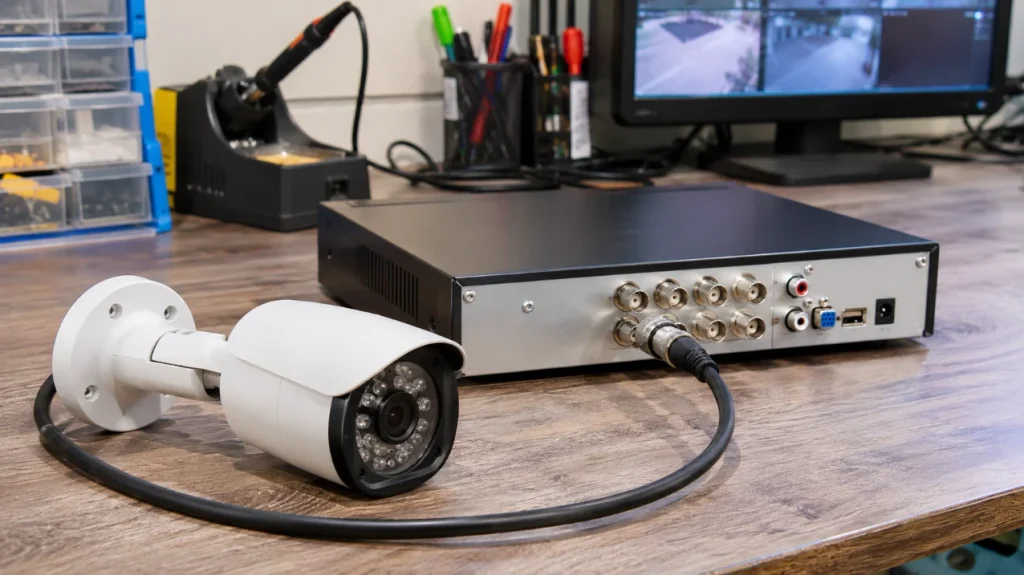
Analog HD cameras transmit high-definition video through a compatible coaxial CCTV system.
Common technologies include HD-TVI, HD-CVI, and AHD. These cameras are generally connected to a compatible DVR, which receives and records the video.
Analog HD cameras remain useful for people who already have coaxial cabling installed and want to upgrade their existing CCTV system without replacing every cable.
Main features
- HD video transmission over compatible coaxial cabling.
- Connection to compatible DVRs.
- Available in dome, bullet, and other designs.
- Different resolutions depending on the camera technology and model.
- Suitable for existing analog CCTV infrastructure.
Where are analog HD cameras used?
- Homes with existing DVR systems.
- Small retail stores.
- Offices.
- Warehouses.
- Older commercial installations.
Advantages and disadvantages
Advantages
- Can reuse suitable existing coaxial cables.
- Practical for upgrading older CCTV systems.
- Compatible with many established DVR installations.
- Modern models can provide high-resolution footage.
Disadvantages
- Usually require separate power wiring.
- Expansion depends on DVR channel capacity.
- Features depend on the camera and recorder.
- Less flexible than some network-based installations.
Best choice: Choose analog HD cameras when you already have compatible coaxial cabling and want to upgrade your existing DVR system.
10. Wireless CCTV Camera
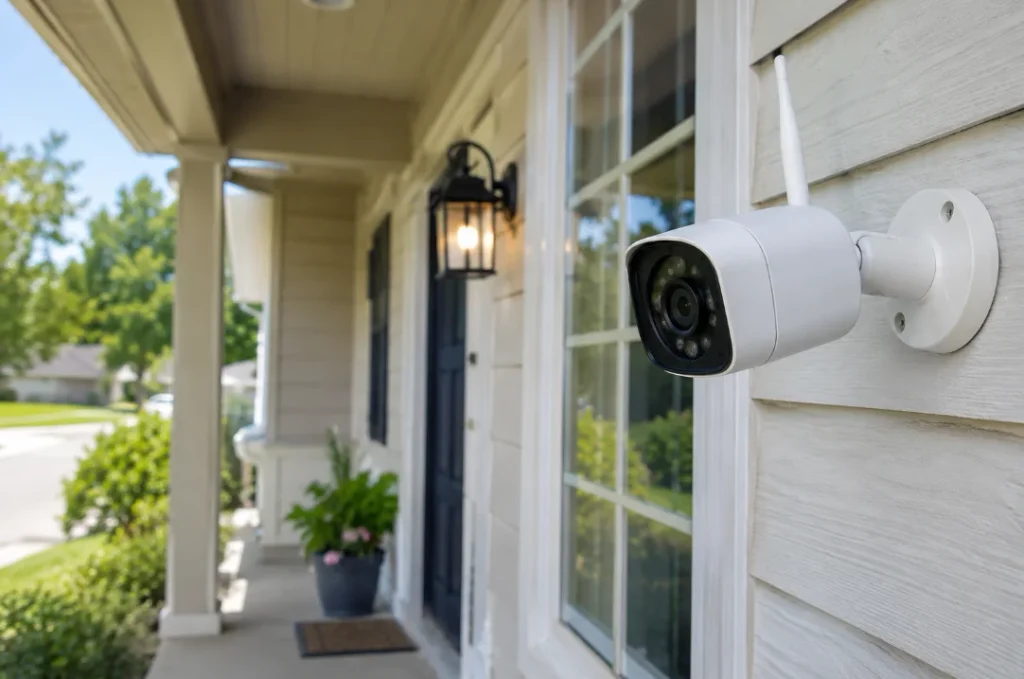
A wireless CCTV camera uses a wireless network connection, commonly Wi-Fi, to transmit video to compatible recording equipment, an application, or a cloud service.
The word wireless can be confusing because it does not always mean that the camera requires no cables.
Many Wi-Fi cameras still need a power adapter or a wired power connection. Battery-powered models are also available, but they have different maintenance and recording limitations.
A wireless camera may also be an IP camera because it transmits digital video over an IP network.
Main features
- Wi-Fi connectivity on supported models.
- Mobile application access.
- Battery-powered or adapter-powered options.
- Local storage or cloud recording, depending on the model.
- Flexible installation where Ethernet cabling is difficult.
Where are wireless cameras used?
- Residential properties.
- Small offices.
- Rental properties.
- Garages.
- Locations where running Ethernet cable is difficult.
Advantages and disadvantages
Advantages
- Less video cabling.
- Convenient installation.
- Easy access through compatible mobile applications.
- Useful for smaller surveillance setups.
Disadvantages
- Depends on wireless signal quality.
- Walls and long distances can weaken connectivity.
- Battery-powered models need charging or battery replacement.
- Some features require subscriptions or internet access.
Best choice: A wireless CCTV camera is suitable when running network cables is difficult and the location has reliable Wi-Fi coverage.
11. Infrared CCTV Camera (IR / Day-Night Camera)
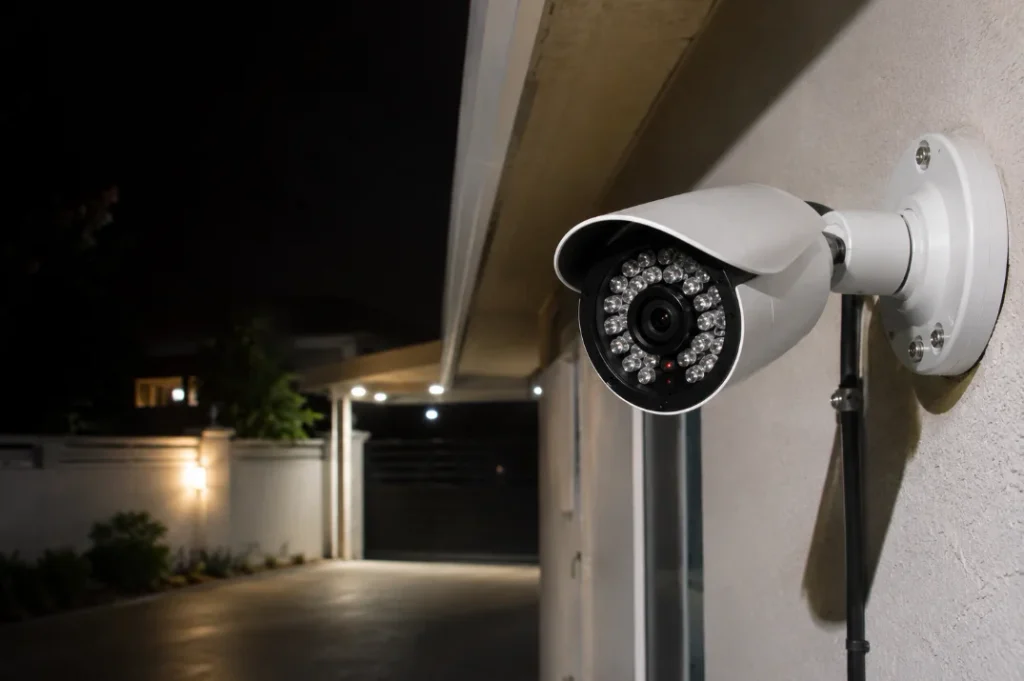
Infrared CCTV cameras are designed to capture video in low-light or dark environments.
They use infrared illumination, usually from integrated IR LEDs, to help the image sensor capture a scene when visible light is limited.
Many day-and-night cameras automatically switch between color daytime imaging and black-and-white infrared night vision.
When infrared illumination is used, the recorded image is generally monochrome rather than natural color.
Main features
- Infrared LED illumination on supported models.
- Automatic day/night switching.
- Low-light video capture.
- Black-and-white night footage in standard IR mode.
- Different infrared illumination ranges depending on the model.
Where are infrared cameras used?
- Outdoor building entrances.
- Parking areas.
- Residential driveways.
- Warehouses.
- Storage facilities.
- Dark corridors and walkways.
Advantages and disadvantages
Advantages
- Helps capture footage in very dark environments.
- Suitable for continuous nighttime surveillance.
- Many models include automatic day/night switching.
- Available in multiple camera designs.
Disadvantages
- Night footage may be black and white.
- IR illumination has a limited effective range.
- Nearby reflective surfaces can cause glare.
- Image quality depends on sensor sensitivity and IR illumination.
Best choice: Infrared cameras are suitable for locations that need nighttime video monitoring without installing separate visible lighting.
12. Thermal CCTV Camera
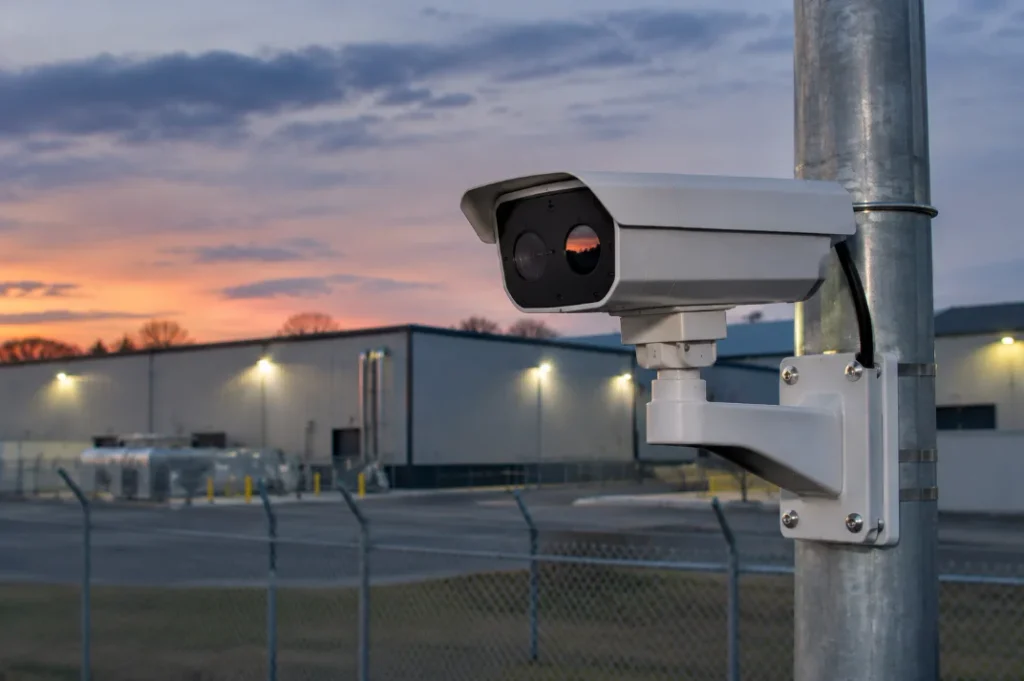
A thermal CCTV camera works differently from a conventional infrared night-vision camera.
Instead of relying on reflected infrared illumination, it detects infrared radiation emitted by objects and converts temperature differences into a visible thermal image.
This allows thermal cameras to detect people, animals, vehicles, and other heat-producing objects in complete darkness and certain challenging visibility conditions.
However, thermal imaging is not a replacement for every conventional CCTV camera. It is generally more useful for detecting and monitoring activity than for identifying a person’s facial features.
Main features
- Detects heat radiation.
- Works without visible-light illumination.
- Can operate in complete darkness.
- Displays temperature differences.
- Available in specialized industrial and security models.
Where are thermal cameras used?
- Industrial facilities.
- Large property boundaries.
- Critical infrastructure.
- Restricted areas.
- Outdoor perimeter monitoring.
- Specialized fire and temperature monitoring applications.
Advantages and disadvantages
Advantages
- Works in complete darkness.
- Detects heat signatures.
- Useful for perimeter detection.
- Can complement conventional surveillance cameras.
Disadvantages
- Generally more expensive than standard CCTV cameras.
- Does not normally provide conventional facial identification detail.
- Requires specialist selection and installation.
- Performance depends on the thermal sensor and environmental conditions.
Best choice: Thermal cameras are suitable for specialized security applications where heat-based detection is more important than conventional visible-light identification.
Different CCTV Camera Types: Which One Should You Choose?
Now that you understand the 12 types of CCTV cameras, the next question is which one is right for your property.
The answer depends on the area you want to monitor, lighting conditions, installation requirements, recording system, and budget.
Here’s a practical comparison.
| Location | Recommended Camera | Reason |
|---|---|---|
| Home entrance | Bullet or turret | Monitors visitors and outdoor access |
| Living room | Dome or compact IP camera | Discreet indoor monitoring |
| Retail store | Dome or fisheye | Covers counters and wider floor areas |
| Office corridor | Dome or turret | Fixed monitoring |
| Parking lot | Bullet or PTZ | Outdoor and wide-area surveillance |
| Warehouse | Bullet, PTZ or multi-sensor | Different viewing distances and coverage |
| Factory perimeter | Thermal and bullet | Heat detection plus visual monitoring |
| Large commercial lobby | Fisheye or multi-sensor | Broad area coverage |
| Existing DVR installation | Analog HD | Can reuse compatible coaxial cabling |
| New network installation | IP / PoE camera | Flexible network-based recording |
Remember that you do not necessarily need the same camera type throughout your property. A combination of dome, bullet, turret, and PTZ cameras may provide more practical coverage than installing only one type.
IP Camera vs Analog HD Camera: What’s the Difference?
One of the most common questions when comparing CCTV camera types is whether to choose an IP camera or an analog HD camera.
Both can provide high-definition video, but they use different transmission technologies.
| Feature | IP Camera | Analog HD Camera |
|---|---|---|
| Video transmission | Digital network data | HD analog signal |
| Common cable | Ethernet | Coaxial |
| Recorder | NVR | Compatible DVR |
| Power | PoE or separate supply | Usually separate supply |
| Network connectivity | Built into the camera | Depends on DVR and system |
| Expansion | Network-based | DVR channel dependent |
| Best application | New network installations | Existing coaxial systems |
IP cameras are often preferred for new network-based installations, while analog HD cameras remain practical for upgrading older coaxial CCTV systems.
The actual image quality depends on the sensor, lens, resolution, lighting, and processing rather than the transmission category alone.
For a detailed comparison, read: IP Camera vs HD Camera: Which CCTV System Is Better?.
Important Things to Check Before Buying a CCTV Camera
Choosing the correct camera shape is only one part of the installation. You should also check the following specifications.
1. Camera Resolution
Resolution determines the number of pixels used to create an image.
Common options include:
- 2MP (1080p)
- 4MP
- 5MP
- 8MP (4K)
Higher resolution can provide more image detail, but it also increases storage and bandwidth requirements. A good lens and sensor are equally important.
2. Field of View
Field of view determines how much of an area the camera can capture.
A wide-angle lens covers more area, while a narrower lens provides a more focused view of distant objects.
Choose the lens based on the actual distance and coverage requirements.
3. Night Vision
Check whether the camera includes infrared illumination, low-light color imaging, or another night-vision technology.
Do not select a camera only by its advertised infrared range. Real performance depends on the scene, lighting, lens, sensor, and installation position.
4. Weather Protection
For outdoor installation, check the camera’s IP weather-protection rating.
For example, IP66 and IP67 ratings describe protection against dust and water under specified test conditions. They do not mean every camera is suitable for every environment.
5. Recorder Compatibility
Before purchasing a camera, confirm that it is compatible with your existing DVR or NVR.
Check supported video technology, resolution, channels, network protocols, and power requirements.
For network cameras, ONVIF conformity can help with interoperability, but it does not guarantee that every feature will work across different brands.
6. Storage Requirements
The number of cameras, video resolution, frame rate, compression, and recording schedule all affect storage requirements.
Use our CCTV Storage Calculator to estimate your surveillance storage needs.
7. Installation and Network Requirements
For IP cameras, check Ethernet cable quality, PoE requirements, switch capacity, and network configuration.
If you’re installing multiple IP cameras, read our guide to 10 Common IP Camera Installation Problems and How to Fix Them.
Frequently Asked Questions
How many types of CCTV cameras are there?
There are many CCTV camera categories. Twelve common and useful categories include dome, bullet, turret, PTZ, fisheye, box, multi-sensor, IP, analog HD, wireless, infrared, and thermal cameras. Some describe physical design, while others describe connectivity or imaging technology.
Which CCTV camera is best for home use?
For most homes, dome, turret, and bullet cameras are practical choices. Use a bullet camera for outdoor entrances and driveways, and a dome or turret camera for indoor areas. The final choice depends on mounting location, lighting, and coverage requirements.
Which CCTV camera is best for outdoor use?
Outdoor-rated bullet, turret, and dome cameras are commonly used for exterior surveillance. For large parking areas, PTZ cameras can provide additional viewing flexibility. Always check the manufacturer’s weather-protection specifications.
What is the difference between dome and bullet cameras?
A dome camera has a rounded protective housing and is commonly used in indoor and outdoor installations. A bullet camera has a cylindrical body and is frequently mounted on exterior walls to monitor entrances, driveways, and property boundaries.
What is the difference between a dome and a turret camera?
A dome camera generally has a transparent protective cover over its lens. A turret camera has an exposed adjustable lens assembly. Turret cameras are often easier to aim and can avoid some infrared reflection issues associated with dome covers.
What is a PTZ CCTV camera?
PTZ means Pan, Tilt, and Zoom. It is a remotely controllable camera that can move horizontally, vertically, and zoom in or out. It is commonly used for monitoring large areas.
What is the difference between an IP camera and a wireless camera?
An IP camera transmits digital video over an IP network. It can use Ethernet or Wi-Fi. A wireless camera usually refers to a model that transmits video over a wireless network rather than a dedicated Ethernet video connection.
Are all IP cameras wireless?
No. Many IP cameras use wired Ethernet connections. Some support Power over Ethernet, which carries both power and data through a compatible Ethernet cable. Other models support Wi-Fi.
What is the difference between infrared and thermal CCTV cameras?
Infrared night-vision cameras use IR illumination to capture reflected infrared light from a scene. Thermal cameras detect heat radiation emitted by objects. IR cameras can provide conventional surveillance footage in darkness, while thermal cameras are particularly useful for heat-based detection.
Can a CCTV camera work without the internet?
Yes. Many CCTV systems can record locally to a DVR, NVR, or camera memory card without an internet connection. However, remote viewing through an external network or cloud service may require internet access.
Which CCTV camera is best for a parking lot?
Bullet cameras are useful for fixed views of parking entrances and vehicle lanes. PTZ cameras can monitor larger areas and allow operators to change the viewing direction. The correct choice depends on parking lot size, lighting, mounting height, and identification requirements.
Which CCTV camera provides the widest viewing angle?
Fisheye and panoramic cameras are designed to provide very wide coverage. Multi-sensor cameras can also monitor multiple directions from a single mounting location. Their actual coverage depends on lens design, sensor configuration, and installation position.
Final Thoughts
There is no single CCTV camera type that works best for every installation. Dome cameras are useful for indoor monitoring, bullet cameras are popular for outdoor coverage, and PTZ cameras provide flexible monitoring for large areas. IP and analog HD cameras serve different recording and transmission requirements, while infrared and thermal cameras address different low-light surveillance needs.
Before selecting a camera, consider the area you want to monitor, the required viewing distance, lighting conditions, cabling, recorder compatibility, and available budget.
A well-planned combination of CCTV camera types will generally provide more useful coverage than choosing cameras based on appearance or megapixel ratings alone.
